
Introduction to Programming Languages
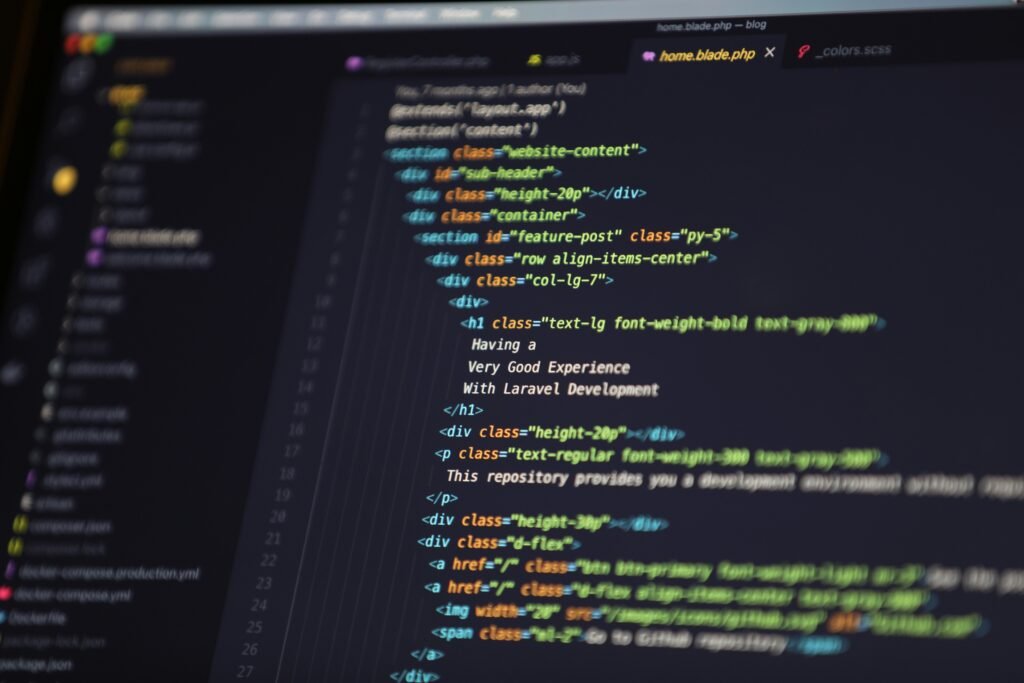
Programming languages are formal sets of instructions and rules that allow humans to communicate with computers. They serve as the foundation of software development, enabling programmers to write code that instructs a computer on how to perform specific tasks. Unlike natural languages such as English or Spanish, which are used for human communication, programming languages are designed with a precise syntax and semantics to facilitate machine understanding.
The primary purpose of programming languages is to create software applications that can perform a variety of functions, from simple calculations to complex simulations. Each programming language has its own set of keywords, structures, and conventions that dictate how code must be written. This structured approach is essential, as computers require unambiguous commands to execute the desired workflow effectively. As a result, programming languages bridge the gap between human logic and machine processing capabilities.
Various programming languages exist today, each tailored for specific tasks and applications. For instance, languages like Python and JavaScript are often employed for web development, while C++ is frequently used in system software and performance-critical applications. Additionally, there are domain-specific languages designed for particular fields, such as SQL for database management, highlighting the versatility and specialization within programming.
Furthermore, programming is not merely about writing lines of code but entails a comprehensive understanding of algorithms and data structures that dictate how information is processed. As computer science continues to evolve, understanding the nuances of different programming languages becomes increasingly vital for developers, enabling them to select the appropriate tools for each unique challenge. In conclusion, programming languages are essential instruments in the realm of computer science, facilitating effective communication between human intentions and computer execution.
Types of Programming Languages
Programming languages can be classified into various categories based on multiple criteria, including their abstraction level, execution model, and usage. This classification helps in understanding how programming languages function and their appropriate applications.
One primary distinction in programming languages is between high-level and low-level languages. High-level languages, such as Python, Java, and C#, are designed to be user-friendly. They offer a strong abstraction from the machine’s hardware, allowing developers to write code without needing to manage complex details of the underlying architecture. Conversely, low-level languages like Assembly and C provide minimal abstraction, granting programmers greater control over hardware resources. This control can yield performance benefits but typically requires more intricate understanding and management of the system.
Another significant classification is based on whether a language is compiled or interpreted. Compiled languages, such as C and C++, require code to be translated into machine language by a compiler before execution. This process often results in faster execution times, as the machine code runs directly on the hardware. Interpreted languages, on the other hand, like JavaScript and Ruby, are executed line by line by an interpreter at runtime, which can simplify debugging and make development faster but can lead to slower performance during execution.
Scripting languages represent another important category, often used for automating tasks or enhancing web pages. Languages like Python, JavaScript, and Perl fall into this category; they are frequently easier to write and modify due to their dynamic typing and flexibility. While they can be interpreted or compiled, their primary purpose is to enable quick software development and integration of functionalities.
By understanding these types of programming languages and their respective characteristics, developers can select the most appropriate language for their projects, thereby optimizing resource allocation and mitigating potential challenges during software development.
Syntax and Semantics
Understanding the concepts of syntax and semantics is essential for anyone engaging with programming languages. Syntax refers to the set of rules that define the structure of a programming language, encompassing how code is written and organized. It dictates the correct arrangement of symbols, keywords, and operators, determining whether a statement is considered valid. For example, in the Python programming language, the syntax mandates the use of colons and indentation to define code blocks. An improperly formatted statement, such as forgetting a colon after a function definition, will lead to a syntax error, thereby preventing the code from executing successfully.
On the other hand, semantics deals with the meaning behind the syntactical arrangements. While syntax addresses the form, semantics focuses on what the code actually does when executed. For instance, consider the following two statements written in a programming language: one might have the syntax of a loop designed to iterate over a range of numbers, while the semantics would describe the specific actions performed during each iteration, such as summing those numbers. It is possible for code to be syntactically correct but semantically flawed; this occurs when the code adheres to the rules of structure but produces unintended or incorrect outcomes due to improper logic or assumptions.
To illustrate, a common example is a loop that runs indefinitely due to miscalculating its termination condition. Here, the syntax could be flawless, while the semantics reveal that the code will never exit the loop, highlighting the crucial distinction between these two concepts. As programmers develop their skills, a firm grasp of both syntax and semantics becomes vital for writing effective and error-free code, enabling clear communication of intent and behavior within their programs.
How Programming Languages Work: Compilation and Interpretation
Programming languages serve as a crucial interface between human logic and machine comprehension. High-level programming languages allow developers to write code in a more understandable format, which is then converted into machine code that computers can execute. This transformation can occur through two primary methods: compilation and interpretation.
Compilation involves translating the entire source code of a program into machine code before execution. This compilation process generates an executable file, which can be run directly by the computer’s hardware. Languages such as C and C++ rely heavily on compilation. The primary advantage of this method is performance; compiled programs typically execute faster since they have been fully translated into machine language. However, the compilation process can be time-consuming, especially for large codebases, and any modifications require recompilation to reflect changes.
On the other hand, interpretation translates the code line by line at runtime. This means that languages like Python and JavaScript are interpreted, allowing for greater flexibility during development. One of the key advantages of an interpreted language is ease of debugging; programmers can quickly identify and resolve issues since the code is processed incrementally. However, interpreted code can result in slower performance compared to compiled code, as each line must be translated on-the-fly during execution.
Both approaches have their respective benefits and limitations, influencing a developer’s choice of language based on specific project requirements. Some languages even employ a hybrid model, where code is first compiled into an intermediate form before interpretation, balancing the advantages of both methodologies. Ultimately, understanding how these processes work is essential for harnessing the full potential of programming languages in software development.
The Role of a Compiler
Compilers play a crucial role in the realm of programming languages, serving as the intermediary between high-level source code written by programmers and the low-level machine code that the computer’s hardware can execute. The primary function of a compiler is to translate this source code into an executable form, enabling it to perform the desired tasks efficiently.
The process of compilation typically consists of several key stages. The first stage, known as lexical analysis, involves scanning the source code to identify tokens. These tokens are the basic building blocks composed of keywords, identifiers, operators, and literals. Next, the syntax analysis stage, also referred to as parsing, examines these tokens according to the grammatical rules defined by the programming language. This stage produces a parse tree or abstract syntax tree, which represents the hierarchical structure of the code.
Following syntax analysis is the semantic analysis phase, where the compiler checks for semantic errors, such as type mismatches or variable scope violations. It ensures that the meaning of the code is logical and conforms to the rules of the language. Once these checks are completed, the compiler progresses to intermediate code generation, producing a lower-level representation that is easier to optimize. Optimization is a crucial phase, where the compiler applies various techniques to improve the code’s performance, reducing its size and execution time without altering its intended functionality.
Finally, the last stage involves code generation and optimization, where the intermediate code is translated into machine code specific to the target architecture. Additionally, further optimizations may take place at this point to enhance the generated machine code’s efficiency. In this way, compilers not only facilitate the conversion of high-level programming languages into executable code but also actively contribute to the optimization of that code, ensuring that software runs effectively on various hardware platforms.
The Role of an Interpreter
Interpreters are essential components in the landscape of programming languages, serving the critical function of executing code line by line. Unlike compilers, which preprocess the entire code and transform it into machine language before execution, interpreters read and execute code in real-time, providing immediate feedback and response. This real-time execution makes interpreters particularly valuable for scripting languages such as Python, Ruby, and JavaScript, where rapid prototyping and iterative development are common practices.
One significant advantage of using an interpreter is its agility in testing and debugging. Developers can execute portions of code spontaneously, allowing for quick identification and resolution of errors. This capability is highly beneficial in educational settings or for beginners learning programming concepts, as it fosters an interactive and engaging environment. Furthermore, interpreters often facilitate cross-platform execution since the same source code can be run on various operating systems without modification, provided an appropriate interpreter is available.
However, there are downsides to using an interpreter. The line-by-line execution can result in slower performance compared to compiled code, as each line must be parsed and executed individually. This may render interpreters less suitable for performance-intensive applications, such as game development or systems programming, where execution speed is paramount. In such cases, developers often opt for compilers that generate machine code beforehand, allowing for optimized performance.
In addition, the reliance on an interpreter can lead to dependency on specific runtime environments, complicating deployment in some circumstances. However, while both interpreters and compilers have their respective strengths and weaknesses, the choice between them ultimately depends on the specific needs of a project, the programming language in use, and the desired outcomes. Understanding the role of an interpreter provides invaluable insight into the execution of programming languages and assists developers in making informed decisions regarding their programming methodologies.
Paradigms of Programming Languages
Programming languages are primarily categorized into several paradigms, which define a distinct approach to programming and influence how developers write and structure their code. The key paradigms include procedural, object-oriented, functional, and declarative programming, each contributing unique methodologies to software development.
Procedural programming is one of the earliest paradigms, focusing on a sequence of instructions or procedures that manipulate data. This paradigm emphasizes a linear progression of commands, making it straightforward for beginners to grasp. Languages such as C and Pascal exemplify this approach, as they allow programmers to express tasks as a series of operations, leading to structured and well-organized code.
Object-oriented programming (OOP) builds upon the procedural paradigm by introducing the concept of objects, which encapsulate data and behavior together. This paradigm promotes code reusability and modularity, allowing developers to create complex systems through interactions between objects. Popular languages that employ OOP principles include Java, Python, and C++. Through OOP, programmers can model real-world entities, which simplifies the design process and enhances collaboration within large teams.
Functional programming takes a different approach, advocating for the use of pure functions and immutability. It emphasizes the evaluation of expressions rather than the execution of commands, aligning closely with mathematical functions. Languages such as Haskell and Lisp champion functional programming, encouraging developers to write code that is more predictable and easier to test due to its stateless nature.
Lastly, declarative programming focuses on expressing the desired outcome rather than detailing the steps to achieve that outcome. It allows programmers to define what the program should accomplish, rather than how to accomplish it. SQL and HTML are prime examples of declarative languages, as they enable users to describe data and structure without necessitating explicit procedural instructions.
In essence, the choice of programming paradigm significantly influences a programmer’s workflow, software structure, and overall productivity. Understanding these paradigms allows developers to select the most suitable language and approach for addressing specific challenges in their projects.
The Evolution of Programming Languages
The evolution of programming languages has been a dynamic process, reflecting the growing complexity of computing needs and the ever-changing landscape of technology. In the early days of computing, programming was done in machine code, which consisted of binary instructions directly understandable by a computer’s central processing unit (CPU). This low-level language, while efficient, was also challenging and error-prone, as it required programmers to manage extensive details manually.
To address the limitations of machine code, assembly languages emerged in the 1950s. These languages provided a more readable format by using symbolic representations for instructions and memory addresses. Although assembly language simplified the programming process, it was still closely tied to the architecture of the underlying hardware, making it less portable across different systems.
The development of higher-level programming languages began in the late 1950s. Languages like Fortran and COBOL marked significant milestones, allowing developers to write code using more natural language constructs. Fortran, primarily geared toward scientific computing, introduced features such as loops and conditionals, making complex calculations simpler. COBOL, on the other hand, was designed for business applications, focusing on data manipulation and file handling.
As computing power increased and the need for software diversification grew, new languages such as C and Pascal were created in the 1970s. These programming languages provided abstraction from hardware specifics while maintaining efficiency. C, in particular, laid the foundation for modern languages by introducing concepts such as structured programming and system-level access.
The 1990s and early 2000s witnessed the rise of object-oriented programming languages like Java and C++, which further simplified the software development process by enabling code reusability and easier maintenance. Today’s high-level programming languages, including Python and JavaScript, continue to evolve, offering powerful features that cater to diverse applications—from web development to data science. This ongoing evolution illustrates how programming languages adapt to technological advancements and user requirements, paving the way for future innovation.
Conclusion and Future Trends
Programming languages serve as the foundation of software development, fostering innovation and enabling the creation of diverse applications across multiple domains. Their role within technology cannot be overstated, as they facilitate communication between human developers and computers, allowing for the expression of complex algorithms and data manipulation. The evolution of programming languages often reflects broader technological trends, with newer languages arising to address specific needs, performance considerations, or paradigms in software design.
As we advance in the realm of technology, we observe several emerging trends that are likely to shape the future of programming languages. One of the most significant trends is the increased emphasis on simplicity and readability. Developers are prioritizing languages that lower barriers to entry, allowing individuals with minimal coding experience to contribute effectively to software projects. Additionally, the paradigm of ‘no-code’ and ‘low-code’ platforms is gaining traction, enabling users to leverage visual programming tools to build applications without needing extensive knowledge of traditional programming languages.
Furthermore, there is a growing interest in languages that support concurrent and parallel programming, meeting the demands of today’s multi-core processors. As applications become more complex, the need for efficient management of resources and execution becomes essential. Languages that enable seamless concurrency will likely gain favor in future software development cycles.
Another noteworthy trend is the rise of domain-specific languages (DSLs), which are designed to cater to particular application domains, thus enhancing productivity and efficiency for specialized tasks. This focus on tailored solutions is indicative of the drive to improve development workflows and outcomes.
Ultimately, as technology continues to evolve, programming languages will adapt to meet new challenges, ensuring their relevance as essential tools for future software development. Their ongoing evolution will play a critical role in shaping the technological landscape, facilitating further innovation and creativity. Ensuring a grasp of these programming languages is vital for both aspiring and established developers navigating this dynamic field.
About the Author





1 thought on “Understanding Programming Languages: How They Work”