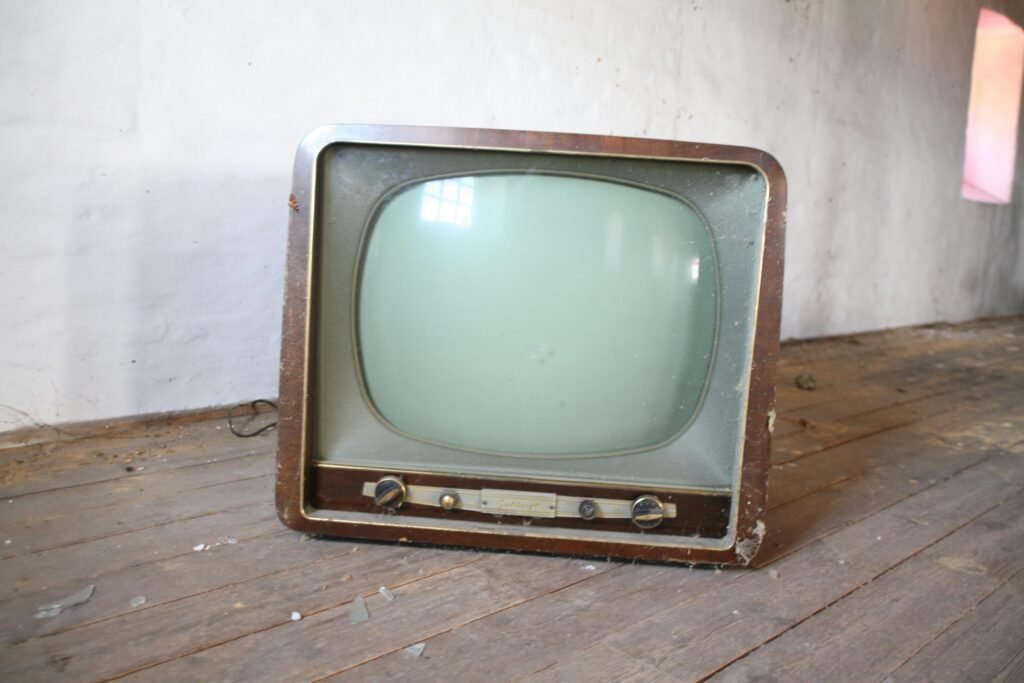
Introduction to Television
Television is a groundbreaking invention that has fundamentally altered the landscape of communication and entertainment since its inception. Defined as an electronic medium that transmits moving images and sound, television serves as a primary conduit for delivering information, narratives, and cultural content to a global audience. From its early mechanical prototypes in the 1920s to the sophisticated digital platforms of today, television has undergone a remarkable transformation, adapting to technological advancements and shifting viewer preferences.
The significance of television in modern society cannot be overstated. It acts as a major source of news, education, and entertainment, allowing individuals to engage with diverse viewpoints and cultures from the comfort of their living rooms. This visual medium transcends linguistic barriers, offering a unique platform for cultural exchange. Through documentaries, films, and television series, viewers gain insights into lifestyles and ideologies from around the world, fostering understanding and empathy among different communities.
In the realm of information dissemination, television has proven to be an invaluable resource during pivotal moments in history. It has the power to shape public opinion, mobilizing communities for social change in times of crisis or celebration. Images and stories broadcasted through television have the ability to evoke strong emotional responses, making it a powerful tool for storytelling that resonates with audiences on a personal level.
As we explore the birth and evolution of television further, it is crucial to recognize its enduring impact on cultural connectivity. With the proliferation of streaming services and on-demand content, the ways in which audiences interact with television continue to evolve, yet its role as a cornerstone of modern life remains unchanged. Understanding these dynamics allows us to appreciate not only the technological advancements behind television but also its profound influence on our shared cultural narratives.
The Concept of Television: Early Ideas
The concept of television can be traced back to a series of innovative ideas and experiments in visual communication that emerged during the late 19th and early 20th centuries. Early visionaries envisioned a system that would allow the transmission of moving images over distances, which was a significant departure from traditional radio communication that focused solely on audio. One of the fundamental principles was the ability to transmit images using electromagnetic waves, a concept that was largely theoretical until various inventions made it possible.
In the 1870s, pioneering scientists such as Johann Heinrich Hertz demonstrated that electric waves could be generated and detected, laying the groundwork for future developments. Simultaneously, the notion of converting images into electric signals became increasingly appealing. Numerous inventors began conducting experiments in this context. For instance, Paul Nipkow developed the Nipkow disk in 1884, an early mechanical device that enabled the scanning and transmission of images, albeit with considerable limitations in resolution and quality.
Advancements continued to be made throughout the early 20th century, particularly during the 1920s. Notably, Scottish inventor John Logie Baird successfully demonstrated the first working television system in 1926, using a combination of mechanical and electronic principles to project live images. Baird’s experiments highlighted the dual nature of early television concepts—incorporating both the desire to transmit motion and the technical challenges associated with it. Furthermore, in 1927, Philo Farnsworth developed the fully electronic television system that would ultimately replace earlier mechanical systems, setting the stage for modern television.
This period of experimentation and invention constituted the foundational concepts of television, as inventors and engineers grappled with the complexities of visual transmission. These early thoughts on television did not merely focus on functionality; they also reflected a significant cultural shift towards visual media, foreshadowing the profound impact television would have on society in the decades to come.
The Invention of the First Television: Timeline of Events
The journey towards the invention of the first television is marked by a series of significant breakthroughs in technology, spanning several decades. The groundwork began in the late 19th century, where various inventors tirelessly explored the potential for capturing and transmitting images. In 1884, German inventor Paul Nipkow developed the Nipkow disk, a pivotal device that facilitated the mechanical scanning of images. This disk laid the foundation for early television technology by enabling the transmission of visual information through a rotating disk with holes.
The 1920s marked a period of rapid advancement in television technology. In 1924, Russian émigré Pioneer, A. A. Campbell Swinton, conceived the idea of a cathode ray tube for television purposes. Meanwhile, in the United Kingdom, John Logie Baird achieved a breakthrough in 1926 when he conducted the first public demonstration of television. His device transmitted live moving images, sparking considerable interest in the potential of television for entertainment and information dissemination.
Another notable milestone occurred in 1927 when Philo Farnsworth, a young American inventor, successfully transmitted the first electronic television image. At just 21 years old, Farnsworth’s innovative approach incorporated the use of the electron tube, which greatly improved image quality and reliability over Baird’s mechanical methods. By 1930, Farnsworth’s work culminated in the first complete electronic television system, further revolutionizing the medium.
These collective efforts and innovations laid the cornerstone for what would become a new era of communication and entertainment. Each inventor played a crucial role in the development of television, paving the way for the eventual commercialization of the technology in the late 1930s. The foundation established during this timeline significantly shaped the future paths television would take, raising expectations for visual broadcasting across the globe.
The Year Television was Born: 1927
The year 1927 is widely recognized as a pivotal moment in the history of television, marking its debut as a viable medium for transmitting moving images. This year stands out for the groundbreaking achievements of several inventors, yet one event stands above the rest: John Logie Baird’s demonstration of the first successful moving television image. Baird, a Scottish inventor, had been working tirelessly on the concept of mechanical television since the early 1920s, and his dedication culminated in this historic demonstration held on October 2, 1927.
Baird’s innovation involved a system that combined both light and sound, allowing for the transmission of live images. During his demonstration in London, he managed to successfully transmit a recognizable human face, an achievement that was met with astonishment from spectators. This marked the first instance that moving images were broadcast to a small audience, thus laying the foundation for future television technology. Baird’s technology relied on a rotating disk that captured images in segments, a method that, while primitive by today’s standards, was revolutionary at the time.
In addition to Baird’s accomplishments, 1927 was notable for other advancements in television technology. The same year saw the establishment of the first regular television broadcasts in the United States by Philo Farnsworth, who would later become known as one of the pioneers of electronic television. Farnsworth’s work, alongside Baird’s mechanical approach, demonstrated the diversity of pathways leading to what we now recognize as modern television.
Overall, the developments of 1927 significantly advanced the field of telecommunication, combining scientific inquiry with creative ingenuity, and these early achievements played a crucial role in shaping the technological landscape of the 20th century. The innovations of that year continue to resonate, as they paved the way for the dynamic medium of television we have today.
The Technological Innovations Behind Early Television
The journey of television’s inception is deeply rooted in a series of significant technological advancements that laid the groundwork for what would ultimately become a revolutionary means of communication and entertainment. One of the pivotal inventions in this timeline was the cathode ray tube (CRT), a technology that facilitated the display of images on screens. The CRT was developed in the late 19th century, but it was during the early 20th century that it began to be harnessed for television. The device operates by firing electron beams onto a phosphorescent surface, illuminating it to produce images. This fundamental technology remained in use for several decades, becoming synonymous with television itself.
Accompanying the development of the cathode ray tube, advancements in signal transmission were equally crucial. Early television systems utilized various methods to transmit images and audio signals. Initially, mechanical systems were created, where spinning disks would scan images to compile them into a visible format. However, these mechanical methods were soon replaced by electronic techniques that proved to be much more efficient and reliable. The introduction of electronic scanning in the 1920s marked a turning point. Inventors like Philo Farnsworth and John Logie Baird explored these new possibilities, leading to different approaches in capturing and transmitting televised imagery.
As these innovations coalesced, the television took its first recognizable form. The combination of CRT technology and electronic signal processing paved the way for the first usable televisions in the late 1930s. These machines, although rudimentary by today’s standards, showcased the potential of television as a medium capable of broadcasting moving images and sound to audiences. Understanding these early technological innovations is essential for appreciating the evolution of television and the profound impact it has had on society. The convergence of ideas and technologies created a platform that would eventually evolve into the modern televisions we enjoy today.
The Public’s Reaction to Televisions in the Early Years
The advent of television in the early 20th century generated a significant mix of excitement and skepticism among the public. Initially, many viewed this new medium as a technological marvel with the potential to transform entertainment and information dissemination. The first public demonstrations of television technology captured the attention of curious onlookers, who were thrilled by the prospect of viewing moving images in their own homes. Newspapers highlighted these demonstrations, often emphasizing the novelty and innovation that television represented, which significantly increased public interest.
However, not all reactions were positive. Some skeptics questioned the practicality and necessity of television as an entertainment medium. Concerns were raised regarding its potential effects on social interaction and traditional forms of entertainment. Critics argued that television could lead to decreased engagement with literature and theater, implying a cultural shift that many found troubling. Additionally, there were worries about content regulation, as the implications of broadcasting entertainment and news created a need for guidelines to navigate this uncharted territory.
Despite the hesitations, television found its way into households across America and beyond. Early broadcasts featured a combination of live performances, news, and variety shows, appealing to diverse interests and fostering a growing attachment to the medium. As the technology evolved and programming diversified, audiences gradually embraced television as an essential element of everyday life. The combination of excitement and skepticism characterized this transformative period, as the public began to recognize television’s potential to redefine the landscape of entertainment and news. This evolution set the premise for the enduring influence of television in modern society.
Television’s Evolution Throughout the Decades
The history of television is marked by significant technological advancements and changes in broadcasting methods that have transformed the medium into an integral part of daily life. Beginning in the late 1920s, the first functional television systems were developed. These initial iterations were monochrome and utilized mechanical scanning techniques, which limited their clarity and appeal. However, by the 1930s, electronic televisions began to emerge, offering improved image quality and contributing to the wider adoption of television as a form of entertainment.
The post-World War II era witnessed a rapid expansion of television programming and the establishment of major broadcasting networks. In this period, television transitioned from a novelty to a household staple, with programming that included news, sports, and serialized dramas. The introduction of color television in the 1950s represented another significant leap forward. With vibrant colors, viewers experienced an enhanced portrayal of life on-screen, which captivated audiences and drove sales of color televisions.
As technology matured, the late 20th century saw the emergence of cable and satellite television. These methods provided viewers access to a broader range of channels, influencing television content significantly. The prevalence of cable television in the 1980s and 1990s led to specialized networks catering to niche audiences, thus fostering unique genres and formats, from reality shows to in-depth documentaries. With the advent of high-definition (HD) broadcast technology in the early 2000s, the quality of viewing reached another pinnacle, offering sharper images and richer colors.
Entering the 21st century, television continues to evolve with the rise of streaming platforms and on-demand content. This shift has revolutionized consumption patterns, allowing viewers to watch programming at their convenience, often with few restrictions. Furthermore, innovations such as smart TVs equipped with Internet connectivity have facilitated interactive and personalized viewing experiences. Television remains a dynamic medium, continuously adapting to technological progress and audience preferences.
The Impact of Television on Society
The advent of television has significantly shaped societal norms, values, and behaviors since its inception. Serving not only as a source of entertainment, television has functioned as a powerful tool for education and public discourse. Through educational programming, television has been pivotal in disseminating information, enhancing general knowledge, and fostering a culture of lifelong learning. Educational series and documentaries inform viewers on various topics, from science to history, thus influencing societal values towards the importance of knowledge and education.
Furthermore, television has played a crucial role in shaping public opinion. News broadcasts and documentaries provide a platform for discussing current events, social issues, and political matters. The representation of events through visual storytelling can significantly sway public perception and provoke discourse among viewers. For instance, televised coverage of civil rights movements, wars, and crises has had profound effects on how society responds to such issues. By bringing distant events into living rooms, television connects viewers to the broader world, fostering empathy and understanding within communities.
<pmoreover, a=”” and=”” appearances,=”” as=”” behaviors,=”” both=”” characters=”” classic=”” communities,=”” cultural=”” depicted=”” diverse=”” dynamics=”” entrenching=”” even=”” events=”” family=”” fashion=”” from=”” further=”” gained=”” has=”” have=”” helps=”” historically=”” ideals.
As a collaborative medium, television continues to evolve, adapting to changing social landscapes. Its impact on society remains profound, affecting attitudes, beliefs, and interactions on both personal and communal levels. As we move forward, television will presumably continue to play an integral role in shaping our collective consciousness and societal fabric.
Looking to the Future: The Next Generation of Television
As we delve into the future of television, it is apparent that the landscape of viewing experiences is poised for significant transformation. One of the major drivers of this evolution is the rise of streaming services, which have already begun to reshape how content is consumed. Traditional broadcasting models are being challenged, with platforms like Netflix, Hulu, and Disney+ leading the charge by offering on-demand content. This shift has enabled personalized viewing experiences, allowing audiences to tailor their subscriptions to their preferences, indicating that the future of television will likely revolve around flexibility and user choice.
In addition to streaming, the introduction and integration of virtual reality (VR) technology present an exciting frontier. VR allows viewers to immerse themselves in the narrative, embodying characters or exploring environments far beyond the confines of a traditional screen. As hardware improves and the content becomes more engaging, VR could become a staple in households, redefining not just how entertainment is consumed, but the very essence of storytelling itself. The blending of physical reality and virtual experiences signals a transformative era for interactive television.
Furthermore, the inclusion of artificial intelligence (AI) will undoubtedly influence the future of television technology. AI can enhance content curation, providing highly personalized recommendations based on viewing habits, mood, and preferences. This capability ensures that the viewers are not merely passive consumers but active participants in selecting content that resonates with them. Advanced algorithms will also optimize content creation, potentially revolutionizing how shows and films are produced and marketed.
The convergence of these technologies—streaming services, virtual reality, and artificial intelligence—points toward a multi-faceted future for television. Ultimately, as these trends continue to unfold, they will shape not only how we consume media but also how we connect, engage, and interact within our digital landscape. The evolution of television is ongoing, and the coming years promise unprecedented changes that will redefine the viewing experience.
About the Author