
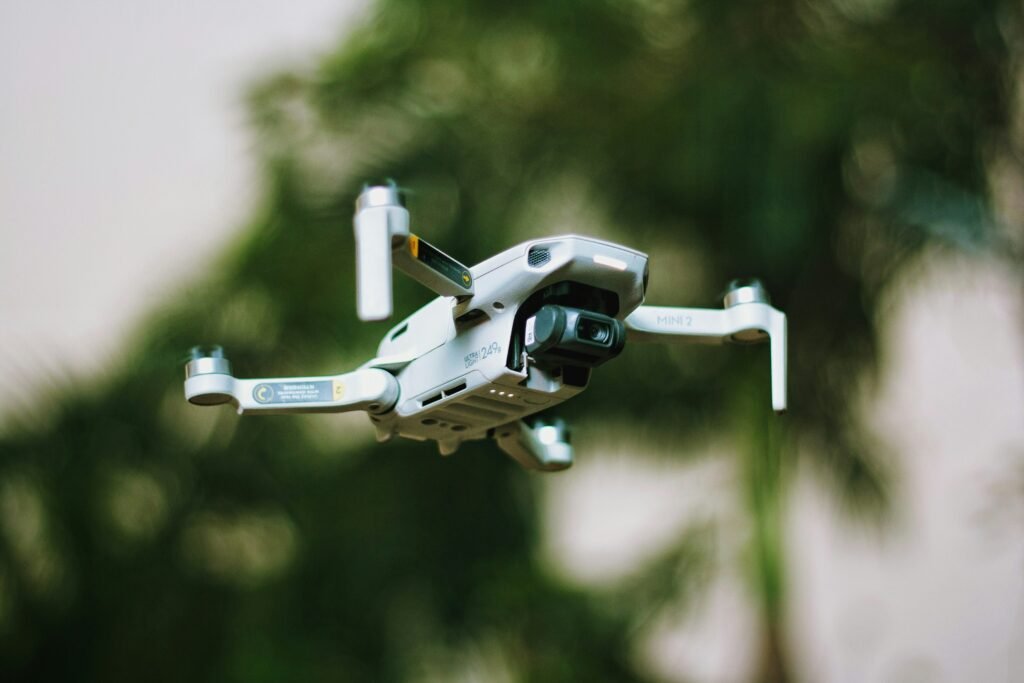
Introduction to Smart Drones
In recent years, the evolution of drone technology has accelerated, leading to the emergence of smart drones, which are designed to perform complex tasks with an unprecedented level of autonomy and precision. Unlike traditional drones, smart drones are equipped with sophisticated features, including advanced sensors, artificial intelligence, and data analytics capabilities that allow them to adapt to various environments and applications. This advancement in technology has enabled smart drones to become increasingly significant across multiple industries, including agriculture, logistics, and emergency services.
One of the defining characteristics of smart drones is their autonomous capabilities. These drones can execute missions without human intervention, thanks to their ability to process real-time data from integrated sensors. This level of independence not only improves operational efficiency but also expands the scope of activities that drones can undertake, such as automated aerial surveys, precision agriculture, and monitoring of infrastructure. Such advancements position smart drones as vital tools in improving workflow efficiency and versatility.
Moreover, smart drones incorporate advanced sensors that enable them to gather and analyze vast amounts of information. These sensors can capture high-resolution images, perform thermal imaging, and detect environmental changes, allowing users to derive actionable insights. For instance, in agriculture, farmers utilize drones with multispectral cameras to assess crop health and determine irrigation needs, thereby optimizing yields and reducing resource consumption.
Lastly, the data analytics capabilities of smart drones differentiate them from their traditional counterparts. They are capable of processing and interpreting data on the fly, thus allowing for real-time decision-making. This feature is particularly beneficial in emergency situations, where timely information can significantly impact outcomes. Overall, the integration of these innovative capabilities has fundamentally transformed the landscape of drone technology, showcasing the critical role smart drones will play in the future.
Understanding Drone Specifications
In recent years, smart drones have gained significant traction across various industries, making it essential to understand their fundamental specifications. These specifications not only define the capabilities of a drone but also help potential buyers assess which model best fits their needs. Key elements of drone specifications include flight time, payload capacity, operational range, and altitude.
Flight time is a crucial specification for any smart drone operator. Generally measured in minutes, it indicates how long a drone can stay airborne on a single battery charge. Modern drones typically offer flight times ranging from 20 to 40 minutes, with some advanced models extending this duration significantly. This factor is particularly important for applications such as aerial photography or survey mapping, where extended flight time can enhance operational efficiency.
Payload capacity refers to the maximum weight a drone can carry while ensuring optimal performance. This specification is vital for tasks that require the transport of equipment or cargo. For instance, drones used in agriculture or delivery services may need to have higher payload capacities, often exceeding 5 kilograms. Balancing payload with flight time and battery life is essential for smart drone users who require versatility in their operations.
The operational range of a drone describes the distance it can travel from the remote control or base station before losing connectivity. Ranges can vary considerably, from a few hundred meters to several kilometers, depending on the model and technology used. This specification is critical for professionals who need to cover large areas, such as in search and rescue operations or infrastructure inspections.
Lastly, the operational altitude determines how high a drone can operate effectively. Typical altitudes range from a few meters to several hundred meters. This specification can significantly impact data capture and operational safety, as it dictates the visibility angles and resolution of aerial images. Understanding these specifications empowers consumers to make informed decisions when selecting smart drones tailored to their specific requirements.
Autonomous Navigation and Control Systems
In recent years, the integration of advanced autonomous navigation and control systems in smart drones has revolutionized how these devices operate. These systems rely on a variety of technologies, including Global Positioning System (GPS), optical flow, and Light Detection and Ranging (LiDAR), each contributing uniquely to flight safety and operational efficiency.
GPS technology serves as the backbone of navigation for many smart drones. It allows for precise positioning and helps in route planning, enabling the drone to follow a predetermined path while maintaining its altitude and orientation. The capabilities of GPS, however, can be limited in environments where satellite signals are weak or obstructed. To mitigate these limitations, drones are increasingly utilizing optical flow technology, which employs visual data from onboard cameras to estimate the drone’s movement relative to the ground. This is particularly advantageous in complex environments, such as urban settings, where GPS accuracy may falter.
Moreover, LiDAR systems have emerged as critical components in the navigation arsenal of smart drones. LiDAR employs laser pulses to measure distances to the ground and can create detailed three-dimensional maps. This technology enhances obstacle detection, enabling drones to navigate safely and autonomous. When combined with advanced algorithms, LiDAR allows for dynamic adaptation to changing environments, significantly improving operational efficiency and safety.
Furthermore, the combination of GPS, optical flow, and LiDAR capabilities presents a robust framework that ensures smarter navigation for drones. These technologies collectively enhance the drone’s ability to operate in various conditions while ensuring that they return home safely even when faced with unexpected challenges. As these technologies continue to evolve, we anticipate even greater advancements in the autonomous capabilities of smart drones, leading to broader applications in sectors such as agriculture, surveillance, and delivery services.
Camera and Sensor Technology
The evolution of smart drones has brought significant advancements in camera and sensor technology, which are critical components for enhancing aerial imagery and improving data collection capabilities. These technologies play a crucial role in various applications, such as agriculture, surveillance, and mapping. Smart drones are equipped with different types of cameras, including thermal, RGB, and multispectral cameras, each designed to fulfill specific operational requirements and enhance the quality of the data collected.
Thermal cameras are particularly useful for agricultural applications, as they can capture heat signatures from crops and livestock. This capability allows farmers to identify stressed plants, monitor crop health, and optimize irrigation practices. By using thermal imaging, drones can detect temperature variations that are indicative of water stress or pest problems, enabling timely interventions that improve yield and resource management.
RGB cameras, which capture standard color images, are essential for higher-resolution visual documentation and monitoring. They can be employed in various industries for tasks such as site inspections, infrastructure monitoring, and real estate photography. The inclusion of high-definition RGB cameras in smart drones allows for the generation of detailed images that help assess conditions and inform decision-making processes effectively.
Another powerful technology in smart drones is the multispectral camera, which captures data across multiple wavelengths of light. This capability is particularly valuable for precision agriculture, as it enables farmers to conduct detailed analysis of plant health and soil conditions. The data collected by multispectral cameras can produce indices such as NDVI (Normalized Difference Vegetation Index), facilitating informed decisions regarding fertilization, pest control, and overall land management.
Incorporating state-of-the-art camera and sensor technology into smart drones not only enhances the quality of aerial imagery but also provides critical insights that propel various sectors forward. With continued advancements in these technologies, the applications for smart drones are set to expand even further, reinforcing their importance in modern aerial data collection strategies.
Battery Technology and Flight Time
The evolution of battery technology is a pivotal factor in enhancing the capabilities of smart drones. Traditionally, most drones relied on lithium polymer (LiPo) batteries, which, while effective, presented limitations in terms of flight duration and energy density. Recent advancements, however, have paved the way for more efficient batteries that significantly extend flight times and operational ranges. One of the promising developments in this area is the emergence of lithium-sulfur (Li-S) batteries. These batteries boast a higher energy density compared to traditional lithium-ion models, enabling drones to fly for longer durations without increasing weight, thus enhancing overall performance.
Furthermore, solid-state batteries are gaining traction in the drone industry. Unlike traditional lithium-ion batteries that use liquid electrolytes, solid-state batteries utilize solid materials, enhancing safety and energy efficiency. Their potential for rapid charging can drastically reduce downtime, which is essential for commercial and recreational drone operations alike. Innovations in energy management systems are also contributing to increased efficiency by optimizing power distribution and minimizing energy waste during flights.
The advancements in battery technology are complemented by improvements in charging technologies. Fast-charging capabilities have been integrated into many newer drone models, allowing for shorter charging cycles without compromising battery lifespan. Moreover, wireless charging and solar energy harvesting are on the horizon, promising to revolutionize how drones are powered in remote areas or during extended missions. As battery technologies continue to evolve, smart drones are set to achieve unprecedented flight times, significantly expanding their applicability in fields such as agriculture, surveillance, and emergency response.
Data Processing and Analytics
The evolution of smart drones is significantly driven by advancements in data processing and analytics technologies. Modern drones are equipped with sensors and cameras that collect vast amounts of data, which is processed in real-time to derive actionable insights. This capability allows for enhanced situational awareness, making smart drones indispensable tools across various sectors such as agriculture, construction, and emergency response.
One of the key components of efficient data processing in smart drones is the integration of cloud computing. By utilizing cloud services, drones can offload computationally intensive tasks, enabling them to leverage powerful remote servers for analysis. This allows for the processing of large datasets, such as high-resolution images and sensor readings, which can be collated and analyzed almost instantaneously. The cloud also facilitates seamless data storage and sharing among users, promoting collaboration and enhancing the overall utility of collected data.
Additionally, the incorporation of Artificial Intelligence (AI) into smart drone systems has transformed data analytics capabilities. AI algorithms can perform complex analyses of the data gathered during flight, identifying patterns and generating insights that inform decision-making. For instance, in agriculture, AI-enabled drones can assess crop health, predicting yield results based on analyzed data, ultimately helping farmers make informed choices regarding resource allocation and maintenance.
Moreover, real-time analytics provided by smart drones can significantly improve operational efficiency in various sectors. In emergency response scenarios, the ability to quickly process and analyze aerial imagery can enhance situational assessments and lead to more effective strategies in disaster management. This integration of technology not only streamlines workflows but also empowers stakeholders to utilize data-driven insights effectively.
Safety Features and Regulations
Modern drones have evolved significantly in recent years, incorporating advanced safety features that enhance their security during operations. One of the primary innovations is the implementation of obstacle avoidance systems. These systems utilize a combination of sensors, cameras, and artificial intelligence to detect potential collisions with objects in the drone’s path. By processing real-time data, drones can autonomously alter their flight trajectory, ensuring safe navigation even in unfamiliar environments.
Moreover, fail-safe mechanisms play a crucial role in maintaining drone safety. If a drone encounters a malfunction or loses signal, these systems are designed to execute predefined responses, such as returning to the launch point or safely descending to the ground. These built-in redundancies are vital for minimizing the risk of accidents and enhancing operational reliability. With increasing integration of smart technologies, operators can rest assured that their drones are equipped to handle unexpected challenges in the air.
In addition to technological advancements, the legal landscape surrounding drone operations is continuously developing. Regulatory frameworks established by aviation authorities aim to ensure the safe use of drones in public airspace. Compliance with these regulations is essential for both professional and recreational drone operators. Regulations cover various aspects, including flight altitude restrictions, no-fly zones, and requirement for drone registration. As technology continues to progress, regulators are tasked with striking a balance between fostering innovation and ensuring public safety, resulting in an evolving set of guidelines that must be adhered to by all drone users.
Ultimately, the importance of these safety features and regulatory compliance cannot be overstated. By ensuring that drones are equipped with advanced systems to prevent accidents and by adhering to established legal frameworks, operators can contribute to a safer airspace for everyone. As drone technology continues to mature, the integration of safety measures will be critical to the responsible growth of this industry.
Applications of Smart Drones Across Industries
Smart drones have emerged as versatile tools across various sectors, revolutionizing operations and enhancing efficiency. Their ability to capture data and execute tasks from the air allows businesses to improve productivity while reducing operational costs. In the agricultural sector, smart drones are increasingly utilized for precision farming, enabling farmers to monitor crop health, assess irrigation needs, and even apply fertilizers or pesticides with pinpoint accuracy. These drones collect aerial imagery and data, facilitating informed decision-making that promotes sustainable farming practices.
In construction, smart drones are employed for site surveying and project monitoring. Equipped with advanced sensors and cameras, these drones can create high-resolution 3D maps and detect potential issues before they escalate. This proactive approach minimizes delays and reduces expenses, allowing project managers to maintain stringent timelines and budgets. Additionally, the use of drones in construction enhances safety by minimizing the need for personnel to work at great heights or in hazardous areas.
The emergency response sector is also benefiting from smart drone technology. During natural disasters, drones provide real-time aerial surveillance to assess damage and locate victims. Their ability to cover large areas quickly and relay crucial information to rescue teams significantly improves response times and coordination efforts. For instance, drones have successfully been used in search and rescue operations, delivering supplies in hard-to-reach areas and gathering data to inform recovery strategies.
Logistics and delivery services have likewise embraced smart drones to optimize operations. Companies are exploring drone delivery systems for parcels, reducing transit times and costs. Major retailers and logistics firms are conducting tests to ensure reliable delivery services that can reach customers swiftly, highlighting how drone technology can redefine conventional supply chain models.
Future Trends in Drone Technology
The landscape of drone technology is rapidly evolving, with numerous trends indicating significant advancements in the coming years. One of the most notable innovations on the horizon is the integration of 5G connectivity. This advancement is expected to greatly enhance the operational capabilities of smart drones. With faster data transfer rates and decreased latency, drones will be able to conduct real-time data analysis and provide instant feedback. This improvement will significantly enhance remote piloting and surveillance tasks, making drones more effective in various applications.
Another exciting development in the field of drone technology is the emergence of swarming technology. Swarm drones, which operate in coordinated groups, have the potential to revolutionize industries such as agriculture, security, and logistics. By utilizing sophisticated algorithms, these drones can work together to achieve complex objectives more efficiently than individual units. As these systems become more sophisticated, we can expect to see their applications expand dramatically, offering enhanced capabilities in various fields.
As future trends develop, the influence of smart drones on business operations is likely to increase significantly. Businesses may adopt these technologies to streamline operations, improve delivery systems, and enhance monitoring and data collection. Moreover, as drone technology matures, it will increasingly penetrate daily life, offering consumers services such as aerial photography, home delivery, and even emergency response capabilities. The seamless integration of drones into everyday activities will have profound implications for society, changing how we interact with technology and respond to logistical challenges.
Ultimately, the future of drone technology is poised for unprecedented growth and innovation. With advancements in connectivity, coordinated operations, and practical applications across various sectors, smart drones will undoubtedly play a pivotal role in shaping the future of both business and personal life.
About the Author






1 thought on “Exploring the Latest Technology in Smart Drone Specifications”